Abstract
This case study highlights how mango farmers in Guimaras are using Internet of Things (IoT) technologies and data-driven tools to enhance productivity and manage risks associated with climate variability. The initiative showcases a local-tech collaboration that blends traditional knowledge with real-time precision agriculture for sustainable outcomes.
Introduction
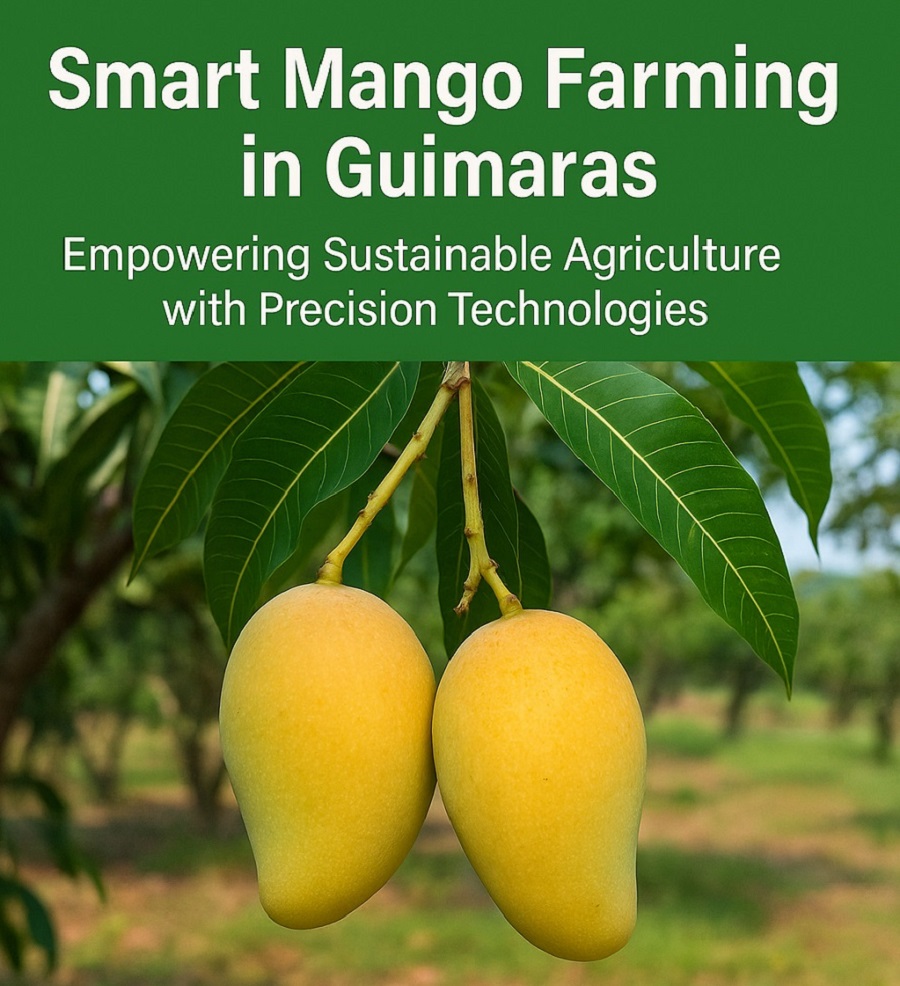
Guimaras, known for its export-grade mangoes, has been threatened by erratic rainfall, pest outbreaks, and limited market intelligence. Recent years have seen smart farming initiatives championed by local cooperatives and research institutions that integrate sensor-based monitoring, weather forecasts, and mobile-based advisory systems (Villanueva & David, 2024).
Methodology
Data was collected through field visits, interviews with farmer cooperatives and tech partners, and review of project reports between February and May 2025. The analysis focused on adoption behavior, yield performance, and system adaptability.
Findings
Key tools include soil moisture sensors, pest trap sensors, and GPS-enabled irrigation scheduling. Farmers report yield improvements of 15–20% and reduced pesticide usage by up to 30%. Mobile dashboards and training facilitated better crop planning and responsiveness.
Discussion
The Guimaras model aligns with climate-smart agriculture (CSA) principles. It demonstrates how digital inclusion, when embedded in community-led training ecosystems, can close yield gaps and buffer climate shocks (FAO, 2023). Challenges remain in scaling and cost accessibility, but success stories are prompting replication across Western Visayas.
Conclusion
Smart farming in Guimaras illustrates the transformative potential of merging tech and tradition in mango agriculture. As digital agri-innovation scales, localized governance and capacity-building will be critical for ensuring equity and resilience across Philippine smallholder communities.
References
- FAO. (2023). Climate-smart agriculture sourcebook (2nd ed.). https://doi.org/10.4060/cb9978en
- Villanueva, J., & David, R. (2024). Integrating smart farming into Philippine mango value chains. Asian Journal of Precision Agriculture, 6(1), 52–69. https://doi.org/10.1016/ajpa.2024.01.006