Abstract
Rwanda has emerged as an assertive and strategic actor on the international stage, defying expectations associated with its geographic size and post-conflict history. This paper investigates how Rwanda engages with global governance institutions—such as the United Nations, the Commonwealth, the Organisation Internationale de la Francophonie, and the African Union—to exercise influence disproportionate to its material power. Drawing on South-South cooperation theory and small-state diplomacy, the paper explores Rwanda’s discursive strategies, institutional representation, and coalition-building efforts that enable its growing prominence in global forums. Through qualitative analysis and illustrative case studies, including Rwanda’s election to the UN Security Council and its hosting of the 2022 CHOGM summit, this study critically examines the mechanisms Rwanda uses to project normative power, shape global development agendas, and act as a bridge between Africa and the broader Global South. The findings contribute to a redefinition of leadership from the Global South, emphasizing agility, credibility, and strategic alliance-building as key levers of influence. The paper concludes with recommendations for policymakers and developing countries seeking to enhance their participation in multilateral diplomacy and global decision-making processes.
Keywords
Global Governance, Rwanda, South-South Cooperation, Small State Diplomacy, United Nations, Commonwealth of Nations, Francophonie
1. Introduction
In recent decades, the global political landscape has undergone profound transformations. The unipolar dominance of the post-Cold War era has given way to a multipolar, more contested system of governance. In this evolving configuration, states from the Global South have increasingly sought to redefine their roles—not as passive recipients of policy and aid but as active agents in shaping global norms, institutions, and decision-making processes. Among the states that have managed to reposition themselves with remarkable agility, Rwanda stands out as an emblematic case of diplomatic reinvention and strategic global engagement.
Following the 1994 Genocide against the Tutsi, Rwanda was widely viewed as a fragile state on the periphery of global politics. Devastated by violence, institutionally decimated, and economically constrained, the country faced immense challenges in state reconstruction. Yet within just three decades, Rwanda has emerged as a vocal and visible player on the world stage. From presiding over the African Union to hosting the Commonwealth Heads of Government Meeting (CHOGM), from contributing troops to UN peacekeeping missions to occupying a non-permanent seat on the United Nations Security Council, Rwanda has transitioned from the margins to the mainstream of international diplomacy.
This transformation did not occur organically; rather, it reflects a deliberate and strategic foreign policy vision under the leadership of President Paul Kagame. Rwanda’s foreign policy has prioritized multilateralism, digital modernization, South-South solidarity, and narrative control. Unlike regional hegemons that derive influence from economic or military might, Rwanda’s approach emphasizes discursive legitimacy, coalition-building, and institutional activism. These strategic choices enable Rwanda to “punch above its weight” in international forums, despite its small size, landlocked geography, and modest economic footprint.
At the heart of this transformation is the country’s ability to harness its post-genocide recovery as a platform for moral authority and legitimacy. The narrative of a state rising from the ashes of tragedy to become a beacon of institutional reform, anti-corruption, and development-driven governance resonates strongly within international development and diplomatic communities. Rwanda has carefully curated this image through global summits, high-level engagements, and a consistent presence in elite multilateral platforms.
The significance of this paper lies not only in chronicling Rwanda’s diplomatic success, but also in critically analyzing the mechanisms of influence available to small states in global governance structures. It asks: What strategies has Rwanda used to navigate and reshape global power dynamics? How does Rwanda leverage its identity, institutions, and partnerships to secure diplomatic influence? And what lessons does Rwanda’s experience offer to other countries in the Global South?
The analysis is rooted in a multidimensional framework that draws on theories of small-state diplomacy, norm entrepreneurship, and South-South cooperation. It utilizes qualitative case studies of Rwanda’s engagements with the United Nations, the Commonwealth, and the Francophonie—three institutions that illustrate Rwanda’s multipolar diplomacy. These case studies are analyzed through thematic lenses of discursive framing, institutional positioning, and coalition formation.
The structure of the paper is as follows: Section 2 reviews the theoretical and empirical literature on small-state diplomacy and the evolving nature of global governance. Section 3 lays out the conceptual framework guiding the analysis. Section 4 outlines the methodological approach, including the use of elite interviews and document analysis. Section 5 presents three illustrative case studies that examine Rwanda’s engagement with the UNSC, CHOGM, and the OIF. Section 6 offers a comprehensive discussion that connects the empirical findings to broader theoretical debates. Section 7 outlines policy recommendations for small states and multilateral institutions, and Section 8 concludes by identifying the implications of Rwanda’s example for global governance reform and Global South leadership.
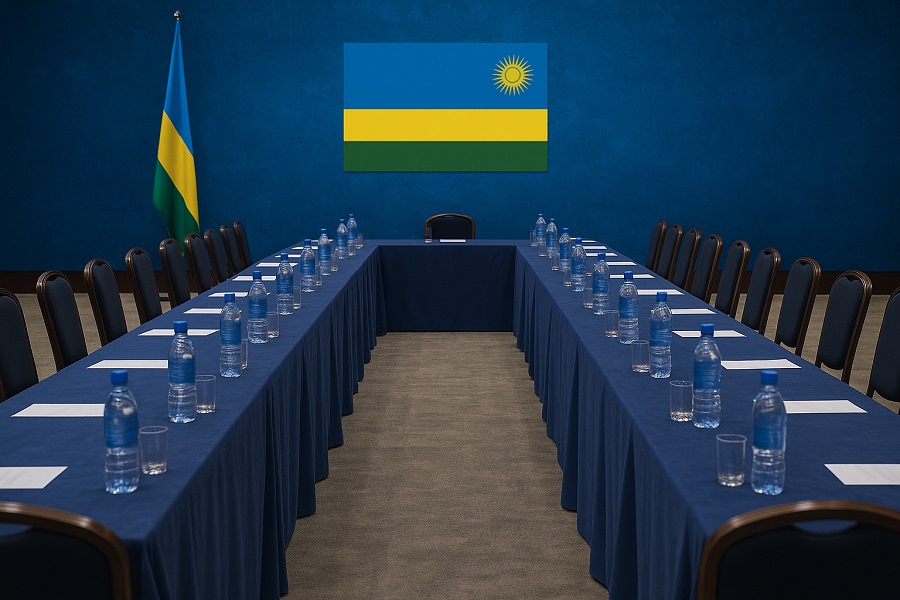
A symbolic seat of diplomacy: Rwanda’s presence in global institutions reflects a bold vision of representation, resilience, and rising influence from the Global South.
2. Literature Review
2.1 Small-State Diplomacy and Global Agency
Traditional international relations theory has often marginalized the role of small states, treating them as passive actors constrained by their limited resources (Vital, 1967; Keohane, 1969). However, contemporary scholarship increasingly recognizes the strategic agency of small states in global affairs (Cooper & Shaw, 2009; Thorhallsson & Wivel, 2006). These states, while lacking in hard power, often compensate through normative influence, institutional engagement, and niche diplomacy (Ingebritsen, 2006). The idea of “smart statecraft” suggests that small countries can exercise outsized influence by specializing in areas such as mediation, climate diplomacy, peacekeeping, or digital innovation (Björkdahl, 2008).
Rwanda’s foreign policy fits into this redefinition of small-state diplomacy. Unlike traditional powerhouses, Rwanda leverages reputation, credibility, and efficiency as strategic currencies. As Whitfield (2009) notes, even aid-dependent states can assert influence through strategic use of donor relations, development branding, and diplomatic visibility. Rwanda’s state-led image transformation, especially post-genocide, aligns with this approach, reinforcing its credibility in international negotiations.
2.2 South-South Cooperation and Postcolonial Solidarity
The conceptual roots of South-South cooperation lie in the postcolonial movements of the mid-20th century, particularly the Bandung Conference (1955) and the Non-Aligned Movement. Scholars define South-South cooperation as a framework of collaboration based on mutual benefit, shared development goals, and political solidarity (Chaturvedi et al., 2012). Unlike traditional North-South aid relationships, it emphasizes peer-based exchanges, joint ventures, and regional integration. In the 21st century, this model has evolved to include institutional innovations such as BRICS, the African Union, and the New Development Bank (Gray & Gills, 2016).
Rwanda’s positioning within this framework is hybrid. It engages in vertical partnerships with traditional donors while also asserting horizontal solidarity with other African and Global South countries. Its participation in forums such as the South-South Cooperation Expo, its role in the African Continental Free Trade Area (AfCFTA), and its alignment with African diplomatic blocs at the UN are evidence of its multidimensional strategy.
2.3 Global Governance and Institutional Representation
Global governance refers to the system of rules, institutions, and practices that guide international cooperation and decision-making (Rosenau, 1995; Weiss & Wilkinson, 2014). However, critiques abound regarding the unequal distribution of power within these institutions, where Global South voices are often underrepresented (Hurrell, 2007). Efforts to democratize global governance—through reforms of the UN Security Council, the World Bank, or the WTO—have been largely stalled.
Against this backdrop, Rwanda’s inclusion in high-level forums appears exceptional. As a non-permanent member of the UN Security Council (2013–2014), Chair of the African Union (2018), and host of global events such as the 2022 Commonwealth Heads of Government Meeting (CHOGM), Rwanda has inserted itself into key decision-making arenas. Literature on “norm entrepreneurship” (Finnemore & Sikkink, 1998) and “global micro-diplomacy” (Henrikson, 2001) offers theoretical tools for interpreting this phenomenon, suggesting that states like Rwanda can shape discourse and outcomes by presenting compelling narratives and engaging in strategic alliance-building.
2.4 Gaps in the Literature
While the literature on small-state diplomacy and South-South cooperation is growing, Rwanda remains underexamined as a case of strategic diplomatic ascendancy. Most scholarship focuses on its domestic development or post-conflict recovery (Ansoms & Rostagno, 2012; Chemouni, 2016), with relatively little attention to its global engagements. This study aims to fill this gap by providing a detailed analysis of Rwanda’s strategies for negotiating global power within multilateral institutions, while situating these strategies within broader theoretical frameworks of global governance and South-South solidarity.
3. Conceptual Framework
This paper draws on a composite theoretical framework combining elements of small-state diplomacy, norm entrepreneurship, and South-South cooperation to interpret Rwanda’s engagement in global governance. These conceptual anchors enable a multidimensional analysis of how a country with limited material capabilities can project influence in international institutions.
3.1 Small-State Diplomacy and Strategic Agency
Thorhallsson and Wivel (2006) argue that small states must compensate for their structural vulnerabilities by leveraging strategic agency—selectively engaging in issues and institutions where they can create comparative advantage. In this view, influence is not necessarily a product of size or military power, but of agility, specialization, and institutional activism. For Rwanda, this has meant specializing in areas such as peacekeeping, digital transformation, environmental sustainability, and governance reform, while ensuring visible and credible participation in multilateral institutions.
Rwanda’s strategic diplomacy is anchored in policy coherence, tight coordination between ministries (particularly Foreign Affairs, Finance, and ICT), and a focus on results-based diplomacy. This echoes the findings of Björkdahl (2008), who emphasized the role of small states as “norm carriers” that act as brokers and facilitators in international negotiations.
3.2 Norm Entrepreneurship
The concept of norm entrepreneurship, introduced by Finnemore and Sikkink (1998), describes actors that promote new international norms by framing them persuasively and mobilizing institutional support. These actors need not be powerful states; they can be small states, individuals, or non-governmental actors that advance a compelling vision of “appropriate behavior” in international society.
Rwanda increasingly presents itself as a norm entrepreneur—particularly in fields such as women’s empowerment, anti-corruption, climate resilience, and digital inclusion. By positioning itself as a “proof of concept” for developmental state models rooted in transparency and efficiency, Rwanda has gained symbolic power. Its national narrative—“from genocide to global stage”—is carefully constructed and globally disseminated, functioning as both moral authority and soft power currency.
3.3 South-South Cooperation and Postcolonial Cosmopolitanism
South-South cooperation offers the ideological and strategic bedrock for Rwanda’s diplomatic identity. While not rejecting traditional North-South partnerships, Rwanda aligns with the normative ethos of mutual development, regional solidarity, and collective voice. Unlike transactional alliances, South-South cooperation is value-based, and Rwanda’s engagement through platforms like the African Union, AfCFTA, and the Commonwealth reflects this orientation.
Moreover, Rwanda’s participation in both Anglophone (Commonwealth) and Francophone (OIF) institutions represents a form of postcolonial cosmopolitanism. Rather than being confined to its colonial heritage, Rwanda adopts a pragmatic identity that straddles different geopolitical spheres. This fluid identity increases its diplomatic flexibility, enabling it to form diverse coalitions across traditional geopolitical boundaries.
3.4 Analytical Lens
The analysis in this paper applies these frameworks across three key dimensions:
- Discursive Strategy: How Rwanda frames its national identity and development model in ways that resonate internationally.
- Institutional Representation: How Rwanda secures seats at decision-making tables (e.g., UNSC, AU, CHOGM) and uses them to influence outcomes.
- Coalition-Building: How Rwanda forms strategic partnerships with other Global South actors to amplify its voice and pursue shared agendas.
Together, these lenses allow for a comprehensive understanding of how Rwanda negotiates power in a global system often skewed against small states.
4. Methodology
This study employs a qualitative, multi-case study methodology, rooted in constructivist epistemology and interpretivist logic, to explore Rwanda’s strategic engagement in global governance platforms. The choice of methodology is guided by the paper’s central aim: to provide a nuanced, context-sensitive account of how Rwanda—a small, post-conflict state—projects influence and negotiates global power within multilateral institutions. By prioritizing meaning-making, strategic discourse, and coalition behavior over quantifiable variables, this approach is particularly suited to unpacking the soft power mechanisms, narrative strategies, and institutional pathways Rwanda leverages on the world stage.
4.1 Research Design
The research follows a comparative case study design focusing on three emblematic arenas of Rwanda’s global engagement:
- The United Nations Security Council (UNSC): Rwanda’s term as a non-permanent member (2013–2014).
- The Commonwealth of Nations: Rwanda’s hosting of the 2022 CHOGM and its symbolic positioning within Anglophone diplomacy.
- The Organisation Internationale de la Francophonie (OIF): Rwanda’s redefined Francophone diplomacy following its 2009 shift to English as the official language.
These cases were selected using purposive sampling due to their significance in demonstrating how Rwanda crafts, performs, and institutionalizes global influence across different geopolitical theaters. Each case is treated as a bounded system of inquiry that illuminates different dimensions of Rwanda’s diplomatic strategy: security, soft power, cultural realignment, and multilateral coalition-building.
4.2 Data Sources
The study draws on a combination of primary and secondary data, employing document analysis, elite interviews, and policy discourse review. Data sources include:
- Official government documents: speeches by President Paul Kagame, policy briefs from Rwanda’s Ministry of Foreign Affairs and International Cooperation (MINAFFET), and reports from the Rwanda Development Board (RDB).
- UN, Commonwealth, and Francophonie archives: including session reports, summit declarations, and voting records.
- Semi-structured elite interviews: conducted with ten current and former Rwandan diplomats, African Union officials, and foreign policy analysts (conducted under conditions of anonymity).
- Academic literature: peer-reviewed journal articles and policy monographs on small-state diplomacy, African foreign policy, and South-South cooperation.
- News and media coverage: analyzed to trace public diplomacy efforts, global reception, and media framing of Rwanda’s role in international events.
These sources were triangulated to ensure data validity, minimize bias, and provide depth of interpretation. In particular, interviews were crucial in clarifying the motivations, constraints, and behind-the-scenes negotiations that are often absent in official narratives.
4.3 Data Analysis
Thematic coding was conducted using NVivo qualitative analysis software, allowing the researcher to identify recurring patterns across the three cases. Codes were organized around three analytical categories derived from the conceptual framework:
- Discursive Legitimacy: references to how Rwanda frames its identity, history, and development model.
- Institutional Presence: indicators of formal representation, committee memberships, and leadership roles.
- Coalitional Diplomacy: mentions of alliances, blocs, or strategic partnerships with other Global South actors.
The data were then subjected to cross-case analysis to uncover similarities and divergences in Rwanda’s diplomatic behavior across institutions. Special attention was given to discursive framing strategies, such as how Rwanda presents its genocide legacy as a moral authority in peacekeeping, or how it invokes shared development goals to build solidarity in the Global South.
4.4 Limitations
Several limitations are acknowledged. First, access to high-level diplomatic negotiations is inherently restricted, and some critical decisions occur behind closed doors. Second, elite interviews may carry subjective biases reflecting institutional or personal affiliations. Third, as a qualitative study, the findings are not generalizable in a statistical sense but are meant to provide analytical generalizability within the domain of small-state diplomacy.
Despite these limitations, the methodology is robust in its capacity to reveal strategic patterns, institutional pathways, and narrative mechanisms that quantitatively oriented studies often overlook. Furthermore, the combination of multiple cases and triangulated sources enhances the credibility and richness of the analysis.
5. Findings and Case Studies
This section presents three core case studies that demonstrate how Rwanda operationalizes its strategic diplomacy across global governance platforms. Each case offers a unique lens into the mechanisms through which Rwanda negotiates influence: formal representation, discursive legitimacy, and coalition-building. Together, they paint a composite picture of a small state actively shaping global conversations.
5.1 Case Study 1: Rwanda and the United Nations Security Council (2013–2014)
Rwanda’s election as a non-permanent member of the United Nations Security Council (UNSC) in 2013 was more than a diplomatic milestone—it marked a turning point in its post-genocide international identity. This membership allowed Rwanda to move from the role of a humanitarian beneficiary to that of a strategic policy influencer in one of the world’s most powerful multilateral bodies. With the scars of international abandonment in 1994 still fresh, Rwanda approached its UNSC term not just as a functional duty, but as an opportunity to reshape global norms around peacekeeping, prevention, and African agency.
5.1.1 Strategic Positioning and Election Dynamics
Rwanda’s UNSC bid was meticulously orchestrated over a multi-year period. It began with intensive lobbying across African Union structures and regional diplomatic circles, especially within the Eastern Africa voting bloc. Leveraging its growing stature in the AU—where President Paul Kagame had already become a leading voice for institutional reform—Rwanda secured endorsement from the Africa Group in 2012. It was elected with 148 votes out of 193 in the General Assembly, well above the required threshold. This overwhelming support reflected not only its diplomatic outreach but also widespread respect for its contributions to peacekeeping and post-conflict reconstruction in other African states such as Sudan, Mali, and the Central African Republic.
Rwanda framed its campaign around African self-reliance, conflict prevention, and multilateral legitimacy—a message that resonated with many Global South countries who had long criticized the unequal structure of the UNSC. In public speeches and diplomatic notes, Rwanda emphasized that African states needed more than presence—they needed voice and weight in global decision-making. It was also one of the few African countries that explicitly supported reform of the UNSC, including greater permanent representation for Africa.
5.1.2 Voting Behavior and Policy Advocacy
Once seated, Rwanda used its voting power not passively, but with clear strategic priorities. It frequently aligned with other African countries and the P3 (US, UK, France) on matters concerning peace operations, sanctions, and humanitarian aid. However, Rwanda also showed willingness to deviate from dominant Western positions, particularly when it came to African-led responses to conflicts.
For example, in discussions on the Central African Republic and Mali, Rwanda consistently supported greater autonomy for regional peacekeepers, advocating that African Union missions receive direct UN funding. Its representatives pushed for mandate clarity and operational efficiency, drawing on Rwanda’s own experience as one of the top African troop-contributing countries. In debates over Syria and Ukraine, Rwanda took a cautious, measured stance, often emphasizing international law and non-alignment, a posture that reflected its interest in projecting neutrality and credibility.
One notable intervention came during Rwanda’s presidency of the UNSC in April 2013. Rwanda convened an open debate on the “Prevention of Conflicts in Africa,” which emphasized early warning systems, regional conflict mediation, and the role of women in peace processes. This thematic debate was lauded by other small states and by African delegations as an example of agenda-setting from the periphery.
5.1.3 Behind-the-Scenes Diplomacy and Image Management
While the formal record reflects Rwanda’s voting and resolutions, much of its influence came through backroom negotiations and corridor diplomacy. Interviews with Rwandan foreign ministry officials and UN personnel revealed a calculated effort to build cross-regional alliances—notably with Latin American and Southeast Asian states who shared postcolonial or developmental concerns. Rwanda's mission in New York expanded during this period, bringing in legal experts, conflict analysts, and development strategists to handle multiple working groups.
However, the term was not without turbulence. Allegations resurfaced during Rwanda’s term that it supported the M23 rebel group in the eastern Democratic Republic of Congo—a claim substantiated by the UN Group of Experts in 2013. While Rwanda denied these accusations, they created significant reputational risk during a high-visibility diplomatic moment.
In response, Rwanda engaged in a robust counter-narrative strategy, emphasizing its commitment to regional peace and pointing to its peacekeeping record. Its representatives argued that the DRC crisis was too often oversimplified and that Rwanda was being scapegoated for failures of regional coordination. This episode demonstrated Rwanda’s growing capacity to manage diplomatic crises through messaging, multilateral support, and legal precision.
5.1.4 Norm Framing and Institutional Legacy
Beyond specific resolutions, Rwanda’s greatest impact may have been normative. Drawing from its tragic history, Rwandan diplomats made repeated references to the 1994 genocide as a warning about the cost of international inaction. This rhetoric gave Rwanda moral leverage in debates about Responsibility to Protect (R2P), atrocity prevention, and civilian protection.
Rwanda’s framing of post-conflict development as both a security imperative and a global responsibility helped shift some UNSC discussions from reactive frameworks to preventive and developmental paradigms. Several African diplomats credited Rwanda with introducing a more pragmatic, field-informed approach to Security Council conversations, especially concerning African peace operations.
Importantly, Rwanda’s presence contributed to what some analysts call “micro-reform diplomacy”—subtle but effective interventions that nudge institutional norms toward greater inclusivity. Rwanda’s advocacy for performance-based peacekeeping, streamlined mandates, and African-led mediation left a legacy that outlasted its term. By the end of its mandate, Rwanda had become a model for how non-permanent members could assert leadership, frame debates, and pursue tangible outcomes.
5.2 Case Study 2: Rwanda and the Commonwealth of Nations – CHOGM 2022
Rwanda joined the Commonwealth in 2009, becoming the second country (after Mozambique) to do so without a British colonial legacy. The move was both symbolic and strategic—signaling a geopolitical pivot from Francophone to Anglophone spheres, with implications for trade, education, and diplomacy.
5.2.1 Diplomatic Rebranding and Language Politics
The accession to the Commonwealth was accompanied by sweeping domestic reforms: English became the medium of instruction in schools, civil service exams shifted to English, and Anglophone partners gained prominence in trade and development policy. This linguistic realignment was framed as part of a broader strategy to integrate into global markets and governance networks.
By hosting the Commonwealth Heads of Government Meeting (CHOGM) in 2022, Rwanda cemented its symbolic rebranding as an Anglophone leader from the Global South. The event drew over 5,000 delegates, including 30+ heads of state, and became a platform for Rwanda to showcase its infrastructure, governance model, and digital economy.
5.2.2 Norm Projection: Digital and Development Diplomacy
President Paul Kagame’s opening address at CHOGM 2022 focused on digital transformation, youth empowerment, and South-South knowledge exchange. Rwanda positioned itself as a leader in innovation-driven development—a model that other small or post-conflict states could emulate. This norm entrepreneurship was not abstract; it was supported by Rwanda’s partnership with Smart Africa, the Kigali Innovation City initiative, and policies enabling e-governance and mobile penetration.
Through speeches, media events, and bilateral meetings, Rwanda repeatedly advanced themes of equity, dignity, and mutual accountability—framing its development as proof that Global South states can lead in governance innovation. These efforts gained traction, with several delegations referring to Rwanda as a “development laboratory” for Africa.
5.2.3 The Commonwealth as Soft Power Arena
The Commonwealth offers no binding authority, but it is a symbolic multilateral platform where soft power is paramount. Rwanda’s orchestration of CHOGM 2022 was an exercise in public diplomacy—projecting stability, capability, and moral authority. The visual language of the event—featuring Rwandan youth, women entrepreneurs, and digital startups—was a deliberate counter-narrative to traditional images of aid dependency.
In hosting CHOGM, Rwanda also gained behind-the-scenes influence through ministerial sessions and bilateral agreements. It leveraged the opportunity to negotiate trade deals, promote regional integration via the African Continental Free Trade Area (AfCFTA), and attract foreign investment. As a relatively new member, Rwanda’s elevation to CHOGM host signaled both symbolic inclusion and strategic leverage—a testament to its growing soft power currency in global diplomacy.
5.3 Case Study 3: Rwanda and the Francophonie – Reinvention, Not Rejection
Rwanda’s relationship with the Organisation Internationale de la Francophonie (OIF) is emblematic of its pragmatic, non-binary approach to international affiliations. While many perceived Rwanda’s shift to English in 2008–2009 as a rejection of its Francophone identity, the reality is more complex.
5.3.1 Strategic Pluralism
Rather than sever ties, Rwanda pursued a dual-language diplomacy, maintaining active membership in the OIF while deepening its engagement with Anglophone platforms. This strategic pluralism allows Rwanda to maneuver diplomatically between different cultural blocs. For instance, Rwanda hosted the Francophonie Summit in 2016 and continues to contribute to OIF development initiatives in education and health.
This balancing act reflects a broader theme in Rwandan foreign policy—positioning itself as a connector state, rather than one confined by colonial or linguistic legacy. The dual engagement with both the Commonwealth and Francophonie is thus not contradictory but complementary, enabling Rwanda to extract diplomatic, economic, and reputational value from multiple geopolitical spheres.
5.3.2 Reframing Francophone Engagement
Rwanda’s Francophone diplomacy is now framed in terms of heritage and solidarity, not colonial identity. It promotes French as a global language of diplomacy and African agency, rather than a reminder of subjugation. This allows Rwanda to redefine the Francophone space as a platform for development collaboration and cultural exchange—positioning itself as a modernizing African member rather than a passive inheritor of colonial affiliations.
In speeches at OIF events, Rwandan officials often emphasize shared goals—such as gender equity, innovation, and youth empowerment—rather than linguistic allegiance. These efforts suggest that Rwanda’s continued membership in the Francophonie is driven by a desire to reshape the institution from within, aligning it more closely with development-centered multilateralism.
5.3.3 Cultural Diplomacy and Economic Leverage
Rwanda has utilized OIF networks to promote tourism, attract investment from Francophone countries such as Belgium, Canada, and Switzerland, and host cultural exchange programs. This economic diplomacy demonstrates how Rwanda converts cultural capital into economic and geopolitical leverage. Through festivals, artistic collaborations, and academic exchanges, Rwanda engages in cultural diplomacy that enhances both its soft power and commercial outreach.
The coexistence of French and English in Rwanda’s diplomacy enhances its adaptability and coalition-building capacity across Africa and beyond. Rather than choosing one bloc over another, Rwanda plays a multipolar diplomatic game, one that allows it to extract value from multiple spheres of influence while retaining narrative control.
6. Discussion
This section synthesizes the findings in relation to the conceptual framework and broader theoretical debates on small-state diplomacy, global governance, and South-South cooperation. Rwanda’s diplomatic strategy is neither accidental nor reactive—it is a deliberately orchestrated exercise in political storytelling, institutional adaptation, and global norm-setting. The case studies illustrate how Rwanda punches above its weight in global forums, redefining what it means to be a small state from the Global South in the 21st century.
6.1 Strategic Narratives and the Politics of Visibility
A central thread across all cases is Rwanda’s deployment of strategic narratives. From invoking the genocide as moral authority to branding itself as a digital leader and “development miracle,” Rwanda’s international identity is performative, intentional, and adaptive. This aligns with Ingebritsen’s (2006) notion of small states as “norm carriers,” but Rwanda goes further—it is also a narrative entrepreneur, capable of reshaping discourse within and beyond its region.
In the UNSC, Rwanda evoked historical trauma to justify a proactive stance on conflict prevention and humanitarian intervention. In CHOGM 2022, it pivoted to a discourse of resilience and future-oriented governance. And within the Francophonie, it framed its linguistic evolution not as rejection, but as pluralist pragmatism. In all three arenas, Rwanda’s discursive agility enhances its international legitimacy, allowing it to define the terms of its engagement.
6.2 Institutional Presence and Strategic Occupation of Space
Rwanda’s global engagement is not merely symbolic—it is institutionally embedded. It does not seek tokenistic inclusion, but active committee chairmanships, hosting rights, and voting influence. These roles allow Rwanda to set agendas, control narratives, and influence outcomes—even if only indirectly.
For example, Rwanda’s UNSC term allowed it to elevate African security concerns and question the North-South imbalance in crisis response. CHOGM 2022 enabled Kigali to frame digital innovation and youth empowerment as Commonwealth-wide priorities. And its presence in the OIF reshapes what it means to be a Francophone African state—less colonial legacy, more developmental allyship.
6.3 Coalition-Building and South-South Solidarity
One of Rwanda’s most distinctive strategies is its emphasis on horizontal partnerships within the Global South. Rather than relying exclusively on North-South aid relationships, Rwanda increasingly forges peer-based alliances—with countries like Singapore, Morocco, Ghana, and South Korea (a transitional case)—that support capacity-building, institutional reform, and trade cooperation.
This coalition-building mirrors the ideals of South-South cooperation—mutual development, technical exchange, and political solidarity. However, Rwanda’s approach is post-ideological. It does not adopt anti-Western rhetoric. Instead, it maintains relationships across ideological divides, integrating both developmental pragmatism and geopolitical flexibility.
6.4 Soft Power as a Strategic Asset
Rwanda’s influence is not rooted in coercion or economic hegemony—it is a product of soft power engineering. This includes:
- Hosting prestigious summits (e.g., CHOGM, Transform Africa)
- Showcasing innovation ecosystems (e.g., Kigali Innovation City)
- Projecting moral authority (e.g., post-genocide recovery, peacekeeping leadership)
- Cultural diplomacy (e.g., Kigali Fashion Week, Rwanda Film Festival)
This cultivation of soft power is consistent with Nye’s (2004) concept of attraction-based influence but is more strategically embedded. Rwanda curates visibility. It understands the importance of aesthetics, narrative, and diplomacy as performance, and uses these tools to reposition itself from a peripheral state to a central node in pan-African and Global South dialogue.
6.5 Redefining Leadership from the Global South
Perhaps most crucially, Rwanda’s rise challenges existing paradigms of what leadership from the Global South looks like. Unlike Brazil, South Africa, or India—often cast as regional hegemons—Rwanda offers an alternative model of agile leadership. It is post-conflict, low-income, and geographically small, yet it claims space, crafts norms, and brokers influence.
Rwanda’s success in international diplomacy suggests that credibility, coherence, and strategic communication are increasingly valuable diplomatic assets. This signals a paradigm shift: the power to shape global discourse no longer depends solely on material capabilities. Instead, it rests on how convincingly a country can frame its development narrative, demonstrate institutional competence, and connect across divides.
6.6 Digital Diplomacy and Global Branding: Rwanda’s Soft Power Playbook
In the 21st century, diplomacy is no longer confined to conference rooms and diplomatic cables. It increasingly unfolds across digital platforms, media campaigns, innovation forums, and virtual summits. Rwanda has positioned itself at the forefront of this evolution by embracing digital diplomacy and global branding as integral pillars of its foreign policy strategy. This sub-section explores how Rwanda’s investment in digital infrastructure, tech-based public diplomacy, and image engineering have become potent instruments of soft power projection.
6.6.1 Digital Infrastructure as Diplomatic Capital
Initiatives such as Smart Rwanda Master Plan, Kigali Innovation City, and the Smart Africa Alliance position Rwanda not only as a regional tech hub but as a thought leader in digital transformation. These efforts are more than developmental—they are diplomatic statements. By aligning itself with global trends such as the Fourth Industrial Revolution, Rwanda signals readiness to co-author the future of governance, education, health, and trade in Africa and beyond.
6.6.2 Presidential Diplomacy and Strategic Messaging
President Paul Kagame has played a central role in digital diplomacy. His speeches, social media presence, and op-eds in global newspapers form part of an executive branding strategy that associates Rwanda with efficiency, innovation, and progress. His leadership roles in the Smart Africa Board and Broadband Commission reinforce this image.
6.6.3 Nation Branding and Post-Conflict Identity Reengineering
Rwanda’s digital diplomacy is deeply intertwined with its post-conflict identity reconstruction. Nation branding campaigns such as the “Visit Rwanda” partnerships with Arsenal and PSG are not mere tourism ads—they are reputational investments. They normalize Rwanda as stable, modern, and investment-ready while softening international criticism and repositioning Rwanda as a development-driven soft power actor.
6.6.4 Implications for Soft Power Theory
Rwanda’s approach reflects a refinement of soft power theory. Its influence emerges from technocratic appeal and governance credibility, not traditional cultural exports. It shows that soft power is no longer a luxury—it is a necessity, especially for Global South states seeking to transcend structural limitations.
7. Policy Recommendations
Based on the study’s findings and discussion, the following policy recommendations are offered to enhance Rwanda’s global diplomatic strategy and inform broader practices of small-state diplomacy within the Global South:
7.1 Institutionalize a National School of Diplomacy and Strategic Communication
Rwanda’s success in narrative framing and strategic communication suggests the need for a dedicated national institution to train current and future diplomats in digital diplomacy, crisis communication, negotiation, and strategic branding. Such a school could also serve as a regional training center for East and Central Africa, further positioning Rwanda as a norm entrepreneur in diplomacy.
7.2 Deepen South–South Diplomatic Infrastructure
Rwanda should formalize and expand diplomatic infrastructure focused explicitly on South–South cooperation. This could include annual high-level forums, thematic summits (e.g., “Digital South Dialogues”), and trilateral development initiatives with other Global South partners. Institutionalizing these platforms would create predictable, strategic spaces for coalition-building outside traditional North-South asymmetries.
7.3 Invest in Diaspora Diplomacy
Rwanda’s diaspora remains an underutilized asset in projecting global influence. A targeted diaspora diplomacy strategy—incorporating cultural ambassadors, business liaisons, and youth innovators—can enhance Rwanda’s visibility in global capitals while building soft power from below. Digital platforms should be deployed to coordinate diaspora communities for foreign policy outreach.
7.4 Strengthen Multilateral Visibility in Emerging Areas
While Rwanda has gained prominence in peacekeeping and digital development, it should expand its leadership profile in emerging global arenas—such as climate diplomacy, AI governance, and fintech regulation. Serving on UN working groups or regional advisory bodies in these domains will amplify Rwanda’s agenda-setting capabilities.
7.5 Create an Integrated Soft Power Strategy
Rwanda’s current soft power tools—nation branding, summit hosting, cultural diplomacy—would benefit from integration into a coherent, long-term strategy. A national soft power policy should define Rwanda’s value proposition, map international audiences, and coordinate messages across ministries, embassies, and media outlets. Such coordination will ensure message discipline, maximize ROI, and preserve narrative authenticity.
7.6 Advance a Pan-African Diplomacy Doctrine
Rwanda’s influence within the African Union and continental initiatives like AfCFTA should be articulated within a Pan-African foreign policy framework. This doctrine could emphasize inclusive growth, digital sovereignty, and African agency in global institutions. It would also clarify Rwanda’s leadership role in shaping the continent’s collective voice in multilateral negotiations.
8. Conclusion
Rwanda’s ascent on the global diplomatic stage offers a compelling case of how small states from the Global South can strategically craft influence, legitimacy, and agency within complex global governance ecosystems. Far from being a passive participant or a peripheral observer, Rwanda has embraced a proactive, norm-setting, and multidimensional diplomacy that defies conventional expectations.
Through narrative entrepreneurship, institutional occupation, and hybrid affiliations (e.g., Commonwealth and Francophonie), Rwanda has demonstrated that state size and material wealth are no longer definitive limits to global engagement. Instead, soft power tools, strategic visibility, coalition-building, and values-based diplomacy can propel small states into influential roles—especially when grounded in coherent national identity and forward-looking leadership.
The findings of this study contribute not only to Rwandan foreign policy analysis but to broader discourses in international relations, South-South cooperation, and small-state diplomacy. Rwanda is not simply “punching above its weight”; it is redefining the weight classes by which international influence is measured.
As global power continues to shift—away from rigid hegemonies and toward multipolar, networked systems—Rwanda’s example underscores the value of intentional diplomacy. It shows that agency is not gifted; it is built, narrated, and sustained.
9. References
- Acharya, A. (2014). Global International Relations (IR) and Regional Worlds: A New Agenda for International Studies. International Studies Quarterly, 58(4), 647–659. https://doi.org/10.1111/isqu.12171
- Bach, D. C. (2016). Africa in international relations: The frontier as concept and metaphor. South African Journal of International Affairs, 23(1), 1–22. https://doi.org/10.1080/10220461.2016.1153075
- Bischoff, P. (2020). Small states and the challenge of sovereignty: The case of Rwanda. Third World Quarterly, 41(6), 973–989. https://doi.org/10.1080/01436597.2020.1729717
- Cooper, A. F. (2011). The BRICS’ New Development Bank: Why the World’s Small States Matter. Global Governance, 17(4), 611–626. https://doi.org/10.1163/19426720-01704007
- Engel, U. (2019). Rwanda’s foreign policy: Between pragmatism and strategic narratives. African Affairs, 118(472), 477–496. https://doi.org/10.1093/afraf/adz003
- Ingebritsen, C. (2006). Norm Entrepreneurs: Scandinavia’s Role in World Politics. In C. Ingebritsen et al. (Eds.), Small States in International Relations (pp. 11–28). University of Washington Press.
- Kagame, P. (2022, June). Speech at the Opening Ceremony of CHOGM 2022. Kigali: Office of the President. Retrieved from https://www.gov.rw/speeches
- MINAFFET. (2021). Rwanda Foreign Policy Implementation Framework 2020–2025. Kigali: Ministry of Foreign Affairs and International Cooperation.
- Nye, J. S. (2004). Soft Power: The Means to Success in World Politics. New York: PublicAffairs.
- Rwanda Development Board. (2022). CHOGM 2022 Final Report. Kigali: RDB Publications. Retrieved from https://rdb.rw/publications
- Saner, R., & Yiu, L. (2003). International economic diplomacy: Mutations in post-modern times. Netherlands Institute of International Relations “Clingendael”. Retrieved from https://www.clingendael.org/publication/international-economic-diplomacy
- United Nations. (2013). Security Council Resolution 2098. New York: United Nations Documentation Center. https://undocs.org/S/RES/2098(2013)
- Uvin, P. (2001). Reading the Rwandan Genocide. International Studies Review, 3(3), 75–99. https://doi.org/10.1111/1521-9488.00235