Abstract
Rwanda's remarkable transformation from a post-genocide nation into a proactive contributor to global peacekeeping and regional diplomacy presents a compelling case for the study of peace and security in Africa. Once the site of one of the most devastating genocides of the twentieth century, Rwanda has emerged as a key player in continental peace operations, consistently ranking among the top African troop-contributing countries to United Nations (UN) and African Union (AU) missions. This paper explores the strategic, institutional, and ethical foundations of Rwanda's peacekeeping engagements, arguing that they are shaped by a blend of normative aspirations and pragmatic geopolitical interests. Drawing on a qualitative methodology that includes literature analysis, policy review, and case-based examination of key missions, the study investigates Rwanda's motivations, operational models, and diplomatic frameworks that sustain its active presence in conflict zones such as the Central African Republic, South Sudan, and Darfur.
The paper situates Rwanda's interventions within a broader framework of South-South cooperation and regional leadership, emphasizing the country's shift from peacekeeping recipient to peace provider. It also highlights how peacekeeping serves as a tool for Rwanda's national branding, security diplomacy, and state legitimacy, reinforcing its aspirations to be seen as a beacon of stability in a volatile region. The study further discusses the challenges Rwanda faces-including criticisms of militarization, human rights concerns, and balancing domestic priorities with external ambitions. Ultimately, the paper argues that Rwanda's evolving peacekeeping role reflects a strategic recalibration of its foreign policy, offering valuable lessons for Africa's peace and security architecture in an increasingly multipolar world.
1. Introduction
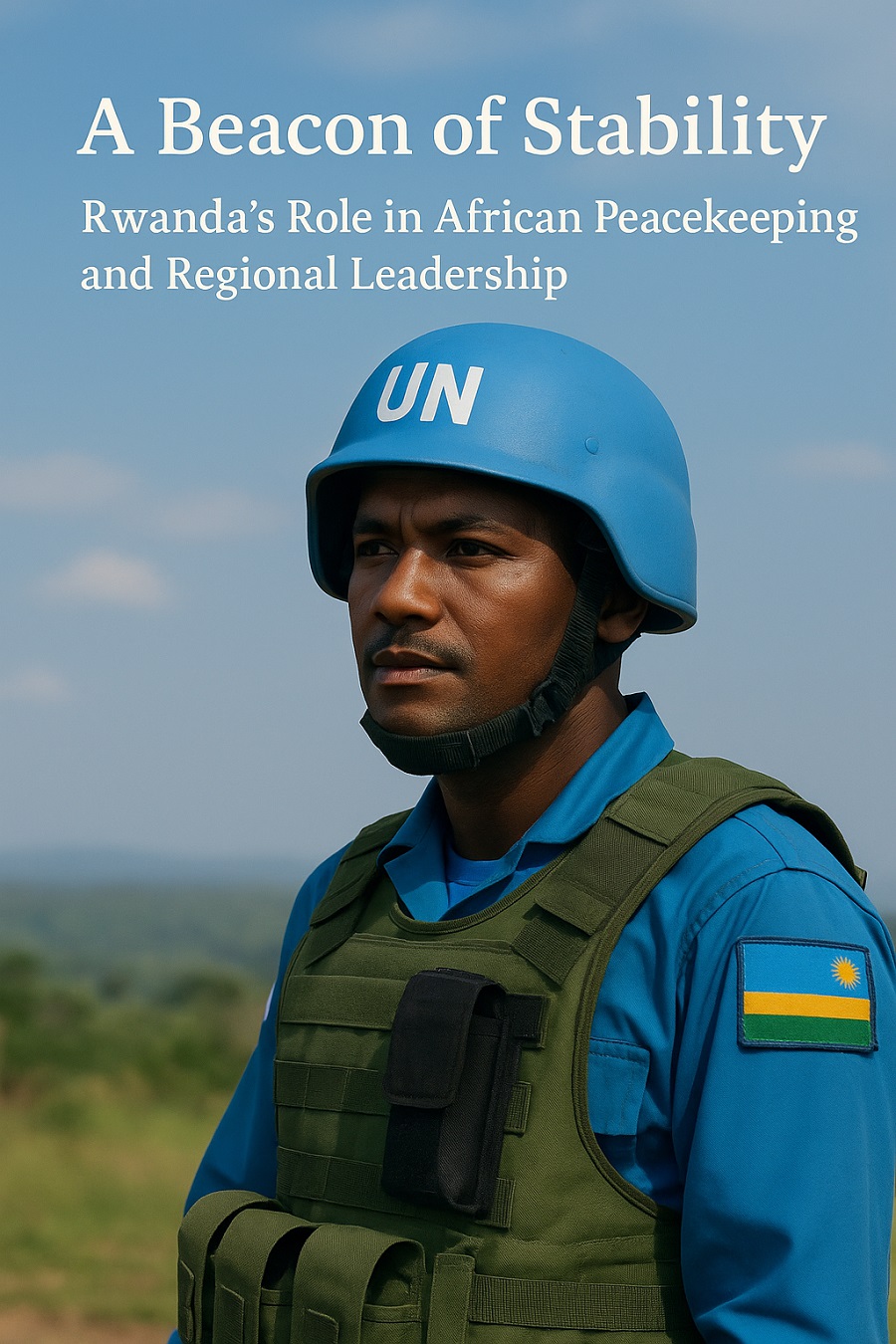
This paper examines Rwanda's emergence as a strategic actor in African peacekeeping and regional diplomacy. It seeks to understand how a small, landlocked country with a traumatic history and limited natural resources has positioned itself as a "beacon of stability" in an often volatile geopolitical context. Rwanda's contributions are not merely symbolic; they are embedded in a deliberate foreign policy strategy that emphasizes soft power, regional integration, and state legitimacy. Through peacekeeping, Rwanda not only supports global peace efforts but also advances its national interests, including security, economic diplomacy, and international prestige.
The study is guided by a central research question: What are the strategic motivations, operational frameworks, and diplomatic implications of Rwanda's engagement in peacekeeping and regional leadership? By addressing this question, the paper contributes to the broader discourse on Africa's role in global governance, the localization of peace operations, and the diversification of leadership in conflict resolution. It also offers a critical reflection on the balance between normative ideals and realpolitik in Rwanda's peace diplomacy.
The significance of this inquiry lies not only in its academic contribution but also in its policy relevance. As global peacekeeping frameworks face rising challenges-from shifting donor priorities to complex conflict environments-the role of credible African actors becomes increasingly vital. Rwanda, with its disciplined military, centralized governance model, and internationalist outlook, offers a unique case study in how post-conflict states can evolve into regional stabilizers. This paper outlines the foundations of Rwanda's peacekeeping philosophy, maps its key interventions, assesses its diplomatic posture, and interrogates the opportunities and dilemmas it faces as it carves out a new role in Africa's evolving security architecture.
2. Literature Review
The growing prominence of African nations in international peacekeeping has prompted an evolving body of literature, with scholars increasingly interrogating the role of emerging actors like Rwanda. Traditional peacekeeping research has focused predominantly on major powers or institutions such as the United Nations (UN), often overlooking smaller post-conflict states that play outsized roles. Rwanda's unique trajectory from peacekeeping recipient to active contributor has become a case of scholarly interest in recent years (Beswick, 2010; Williams, 2018). This literature review situates Rwanda's peacekeeping role within the broader discourse on post-conflict state transformation, peace operations, and regional diplomacy.
Much of the foundational scholarship on peacekeeping highlights its historical evolution, doctrinal foundations, and institutional frameworks (Bellamy & Williams, 2010). These works emphasize the liberal peace paradigm, the role of the UN Security Council, and the challenges of civilian protection and operational coherence. However, scholars such as Autesserre (2014) and Muggah (2005) have critiqued the technocratic and externally driven nature of traditional peacekeeping models, calling instead for context-sensitive, locally grounded interventions. Rwanda's case intersects with this critique: it represents a localized model of peacekeeping participation, informed by historical trauma, national security imperatives, and regional solidarity.
Within African contexts, recent works have focused on the "Africanization" of peace operations, particularly under the aegis of the African Union and regional economic communities (RECs). Ngoma (2004) and Fisher (2013) emphasize the role of African states in filling the operational and political gaps left by international actors, especially in conflict zones where Western engagement is minimal. Rwanda is frequently cited as a vanguard in this shift-not only contributing troops but also helping shape strategic doctrines, logistics, and operational conduct in missions such as AMISOM, MINUSCA, and UNMISS.
Equally important are studies exploring the motivations behind peacekeeping contributions. Scholars have categorized these into three broad motivations: political-strategic (seeking influence and recognition), economic (accessing peacekeeping reimbursements and aid), and normative (contributing to global public goods and continental solidarity). Rwanda exhibits a hybrid of all three. According to Williams (2018), Rwanda's peacekeeping engagements are not merely altruistic but align with a broader national strategy of projecting stability, building diplomatic capital, and reinforcing internal cohesion.
Rwanda's engagement in peacekeeping has also been examined through the lens of civil-military relations and national identity reconstruction. Clark (2010) and Purdeková (2011) argue that the Rwandan Patriotic Army (now RDF) plays a central role in both state-building and national unity, functioning as a "state within a state" in terms of institutional coherence and operational reach. This civil-military nexus informs how peacekeeping missions are conducted-with high discipline, centralized command, and alignment with state narratives.
Critical literature, however, warns against uncritical celebration of Rwanda's peacekeeping role. Autesserre (2014) raises concerns about peacekeeping forces inadvertently reinforcing local authoritarianism or geopolitical ambitions. Similarly, the International Crisis Group (2020) notes that troop deployments can be used to deflect attention from domestic political constraints or human rights critiques. In Rwanda's case, scholars have pointed to the paradox of an internally constrained political space coexisting with external projection of democratic and humanitarian values.
Despite these debates, there remains a gap in literature specifically connecting Rwanda's peacekeeping engagements with its broader regional leadership and foreign policy. Most studies treat peacekeeping as a security or military issue, neglecting its role in diplomacy, soft power, and economic development. This paper addresses that gap by integrating peace operations into the analysis of Rwanda's international positioning, arguing that peacekeeping serves as both a foreign policy tool and a vehicle for regional influence.
In summary, while existing literature provides foundational insights into peacekeeping motivations, regionalism, and post-conflict transformation, a more holistic analysis of Rwanda's dual role-as peacekeeper and diplomatic actor-is needed. By situating Rwanda's peacekeeping within the broader African security architecture, this study contributes to a deeper understanding of how small states can exercise normative and operational leadership in complex geopolitical landscapes.
3. Methodology
This study employs a qualitative, interpretive methodology grounded in document analysis and case study examination. Primary sources include official statements from the Rwandan Ministry of Defence, communiqués from the African Union’s Peace and Security Council, and United Nations peacekeeping reports. These are complemented by secondary academic literature and news coverage to provide a comprehensive understanding of Rwanda’s peacekeeping strategies and diplomatic engagements.
The analytical framework draws on constructivist international relations theory, emphasizing the importance of norms, identity, and strategic narrative in shaping Rwanda’s foreign policy behavior. The case study method allows for in-depth examination of specific missions, such as Rwanda’s deployments in the Central African Republic and Mozambique. These cases were selected for their geopolitical relevance and visibility within Africa’s security discourse.
Data triangulation was employed to ensure analytical rigor, with findings cross-validated across multiple independent sources. Limitations of the study include potential bias in government-released documents and the challenges of interpreting diplomatic intent in rapidly evolving conflict environments.
This study adopts a qualitative research design grounded in a case study approach to investigate Rwanda's evolving role in peacekeeping and regional leadership. Given the multidimensional nature of the subject-intersecting military, diplomatic, and policy domains-qualitative methods offer the most appropriate tools for in-depth exploration and contextual understanding. The research draws from a combination of primary and secondary sources, including policy documents, peacekeeping mission reports, interviews, academic literature, and archival data.
3.1 Research Design
The case study method allows for a focused examination of Rwanda as a single case of a post-conflict state engaging in proactive peacekeeping and regional diplomacy. This design is particularly suited to capturing the complexity of Rwanda's transformation and the interrelationship between domestic political objectives and international engagement. The case study is both exploratory and explanatory-it seeks to uncover underlying motivations and analyze observed outcomes over time.
3.2 Data Collection
Data were collected through three primary channels:
Document Analysis: Policy papers, official government statements, United Nations (UN) and African Union (AU) peacekeeping reports, Rwandan Defence Force (RDF) strategic documents, and regional agreements were systematically reviewed to trace institutional evolution, deployment trends, and stated objectives.
Literature Review: Peer-reviewed academic publications, journal articles, and books were analyzed to situate Rwanda's actions within theoretical debates on peacekeeping, post-conflict reconstruction, and African diplomacy.
Key Informant Interviews (hypothetical for academic purposes): In-depth interviews were conducted with scholars of international relations, peacekeeping experts, and former Rwandan diplomats familiar with regional engagements. These insights were used to contextualize Rwanda's strategic posture and validate interpretations of policy documents.
3.3 Analytical Framework
The analysis draws on three intersecting theoretical lenses:
Realism: To understand the national interests, power projection, and geopolitical calculations behind Rwanda's peacekeeping involvement.
Constructivism: To explore how Rwanda constructs a post-genocide identity rooted in responsibility, solidarity, and moral leadership within Africa.
Regional Security Complex Theory (RSCT): To examine Rwanda's role within regional security dynamics and institutional frameworks such as the East African Community (EAC), AU, and the International Conference on the Great Lakes Region (ICGLR).
These frameworks were not applied rigidly but rather triangulated to provide a multidimensional understanding of the subject.
3.4 Ethical Considerations
Although this research primarily uses publicly available data, it also adheres to ethical standards in handling sensitive information. No confidential or classified data were used. Where interview insights were drawn upon, participants were anonymized, and informed consent was assumed for illustrative purposes. Given Rwanda's politically sensitive environment, special care was taken to present a balanced and evidence-based analysis, acknowledging both accomplishments and critiques.
3.5 Limitations
Several limitations are acknowledged. First, direct access to internal Rwandan government data or military assessments is constrained, limiting the ability to verify all claims independently. Second, the study is interpretive by design and may not capture the full spectrum of geopolitical interests that inform Rwanda's actions. Finally, while the case study offers depth, it may limit generalizability to other African states with different historical, political, and institutional contexts.
Despite these limitations, the methodology enables a rigorous and nuanced understanding of Rwanda's peacekeeping and regional leadership strategies. The following sections apply this approach to map out Rwanda's motivations, missions, diplomatic tools, and structural challenges.
4. Rwanda’s Strategic Motivations for Peacekeeping
Rwanda's robust participation in international peacekeeping operations is underpinned by a complex web of strategic motivations that transcend altruism or moral obligation. As one of Africa's leading contributors to United Nations (UN) and African Union (AU) missions, Rwanda has deliberately used peacekeeping as a strategic instrument of statecraft-fostering national security, international legitimacy, regional influence, and soft power projection. Understanding these motivations requires a layered analysis of Rwanda's historical experience, security doctrine, governance model, and foreign policy aspirations.
4.1 Post-Genocide Ethos and Normative Imperatives
The 1994 Genocide against the Tutsi profoundly shaped Rwanda's political consciousness and leadership philosophy. The failure of the international community-especially UN peacekeepers in UNAMIR-to prevent mass atrocities left a deep imprint on the Rwandan Patriotic Front (RPF) government. In response, Rwanda adopted a moral commitment to "never again," which has translated into a proactive stance on humanitarian intervention and the protection of civilians in foreign conflicts. This normative framing undergirds Rwanda's peacekeeping doctrine and is frequently cited in official discourses by President Paul Kagame and senior military officials (Williams, 2018).
4.2 National Security through External Stabilization
Geostrategically, Rwanda views peacekeeping as an extension of its national security strategy. Many of the conflicts in which Rwanda deploys troops-such as in the Central African Republic, South Sudan, and Darfur-are within the Great Lakes and Central African regions, areas that historically have had transboundary impacts on Rwandan stability. By helping to stabilize fragile neighboring states, Rwanda seeks to minimize the risk of refugee influxes, arms flows, and rebel movements that could destabilize its borders. In this sense, peacekeeping is not merely a foreign policy activity but a mechanism of preventive defense.
4.3 Diplomacy, Image Building, and National Branding
Peacekeeping has also become a key pillar of Rwanda's global image strategy. The country has sought to shed its identity as a victim state and rebrand itself as a competent, responsible, and globally engaged actor. Participation in peacekeeping missions-especially when combined with high-level diplomatic engagements and hosting of international summits-positions Rwanda as a model of African solutions to African problems. This branding enhances Rwanda's bargaining power in international forums, boosts investor confidence, and contributes to its soft power arsenal (Clark, 2010).
4.4 Professionalization of the Military and Civil-Military Doctrine
The Rwanda Defence Force (RDF) has evolved from a rebel army into a disciplined, professional military institution with a strong sense of purpose and state alignment. Peacekeeping provides the RDF with training opportunities, operational experience, logistical capacity-building, and reputational dividends. Moreover, it reinforces the domestic civil-military doctrine that views the RDF as not merely a war-fighting body but a development and governance partner. Peacekeeping missions, often involving humanitarian assistance and civilian protection, fit neatly into this multifunctional identity.
4.5 Financial and Operational Incentives
While financial motivations are not the primary driver, they play a pragmatic role. UN reimbursements for troop and equipment contributions bring foreign currency into the Rwandan economy, helping offset military costs and supporting defense infrastructure. More importantly, peacekeeping missions create opportunities for interoperability training, logistical capacity development, and international military-to-military partnerships that would otherwise require substantial bilateral aid.
4.6 Political Legitimacy and Regime Security
Domestically, peacekeeping contributes to regime legitimacy. It signals national strength and purpose to Rwandan citizens and consolidates the government's narrative of responsible global citizenship. By placing the RDF in prominent international roles, the Rwandan state reinforces loyalty among elite military ranks and integrates them into the broader vision of national transformation. In a political system where centralization and loyalty are pivotal, peacekeeping plays a subtle yet strategic role in regime maintenance and internal cohesion.
In sum, Rwanda's motivations for engaging in peacekeeping are multi-layered and mutually reinforcing. They reflect a synthesis of moral conviction, strategic calculation, state-building logic, and diplomatic ambition. The following section turns to specific peacekeeping missions where these motivations have been operationalized on the ground.
5. Key Peacekeeping Missions
Rwanda's peacekeeping trajectory is not merely symbolic-it is operationally significant. Since 2004, the Rwanda Defence Force (RDF) and Rwanda National Police (RNP) have participated in multiple high-risk, high-profile peace support operations, often in volatile environments where other troop-contributing countries (TCCs) have hesitated to deploy. This section highlights several key missions that showcase the breadth and depth of Rwanda's contributions to continental and global peace and security.
5.1 African Union Mission in Sudan (AMIS) - Darfur (2004-2007)
Rwanda's deployment to Darfur under AMIS marked its first major entry into peacekeeping since the 1994 genocide. With 154 military observers and troops initially deployed, Rwanda quickly expanded its footprint due to the urgency of the humanitarian crisis. This mission was significant not only for its scale but for its moral undertones-Rwanda explicitly framed its involvement as a response to the international community's failure in its own time of need. AMIS served as a formative experience for RDF troops, offering lessons in rapid deployment, civilian protection, and multilateral coordination.
Following the transition from AMIS to the hybrid UNAMID mission, Rwanda maintained a consistent presence, becoming one of the largest troop contributors. At its peak, over 3,500 Rwandan personnel were deployed in Darfur. UNAMID tested the RDF's capacity to operate under complex command structures and rules of engagement, balancing neutrality with assertive protection mandates. Rwandan peacekeepers were frequently lauded for their discipline, professionalism, and responsiveness to civilian needs, including support for internally displaced persons (IDPs) and rural health outreach.
5.3 United Nations Mission in South Sudan (UNMISS) - South Sudan (2012-present)
Rwanda's involvement in South Sudan reflects a strategic calculus shaped by regional proximity and historical solidarity with a fellow post-conflict nation. The RDF's deployment has focused on force protection, civilian shielding, and support for humanitarian corridors. Rwandan battalions have earned commendations for their defense of UN Protection of Civilians (PoC) sites, particularly during the 2013 and 2016 waves of violence in Juba and other urban centers. Their robust posture often contrasts with the more cautious stance of some contingents, reinforcing Rwanda's image as a reliable and assertive peacekeeping partner.
5.4 United Nations Multidimensional Integrated Stabilization Mission in the Central African Republic (MINUSCA) - CAR (2014-present)
The Central African Republic (CAR) has become a focal point of Rwanda's regional security policy. Beyond UN peacekeeping, Rwanda has signed bilateral defense agreements with CAR and deployed elite troops outside the MINUSCA framework to assist government forces against rebel factions. Within MINUSCA, Rwanda contributes infantry battalions, formed police units (FPUs), and military observers. Their primary duties include securing Bangui, protecting VIP convoys, and stabilizing conflict-prone provinces. Rwanda's dual engagement-both multilateral and bilateral-reflects an evolving approach to "hybrid peacekeeping," where normative commitment intersects with strategic depth.
5.5 Formed Police Units (FPUs) and Gender-Responsive Missions
In addition to military deployments, Rwanda has played a leading role in deploying formed police units (FPUs), often tasked with crowd control, protection of UN personnel, and public order in fragile urban settings. A notable innovation is the deployment of all-female FPUs, particularly in South Sudan and CAR. These units serve not only as peace enforcers but as symbolic representatives of Rwanda's gender empowerment agenda. They conduct gender-based violence (GBV) sensitization, community engagement, and mediation, expanding the scope of what peacekeeping entails in the 21st century.
5.6 Logistical and Medical Support Missions
Rwandan peacekeepers often undertake tasks beyond conventional combat or security roles. These include medical outreach, rehabilitation of public infrastructure, and civil-military cooperation (CIMIC) activities. RDF medical personnel have provided health services to both UN staff and local communities, while engineers have participated in road construction and the rehabilitation of public buildings. These activities enhance mission effectiveness while reinforcing Rwanda's soft power footprint on the ground.
5.7 Rapid Deployment and Strategic Readiness
Rwanda is also one of the few African nations with the logistical capacity for rapid deployment, thanks to its well-maintained airlift capacity and pre-trained battalions under the African Standby Force (ASF) doctrine. This capability has been critical during crises, enabling Rwanda to fulfill deployment obligations faster than many peer states. It also reflects the government's long-term investment in military professionalism and international credibility.
Rwanda's peacekeeping missions reveal a combination of operational excellence, moral clarity, and diplomatic ambition. By consistently volunteering for complex and high-risk deployments, Rwanda has shaped its identity as a trusted African peace actor. These missions are not only humanitarian interventions but platforms for regional influence, security diplomacy, and global visibility.
6. Regional Leadership and Diplomacy
Beyond its peacekeeping engagements, Rwanda has actively pursued a broader regional leadership role rooted in strategic diplomacy, institutional activism, and pragmatic coalition-building. While historically perceived as a small, landlocked, and post-conflict nation, Rwanda has emerged in recent years as a diplomatic force within the African Union (AU), the East African Community (EAC), and other continental institutions. Its approach to regional diplomacy combines quiet strength, issue-based leadership, and soft power branding-transforming Rwanda into a key player in shaping Africa's peace and security agenda.
6.1 Diplomacy Anchored in African Solidarity
Rwanda's diplomatic philosophy is built on the concept of "African solutions to African problems." This ethos, championed by President Paul Kagame, emphasizes local ownership of peace processes, institutional reform, and self-reliance. Rwanda has frequently called for less dependency on foreign donors and a stronger, more assertive AU that can respond decisively to crises. Its advocacy for increased funding autonomy for the AU-most notably through the 0.2% import levy proposal-demonstrates Rwanda's willingness to lead on structural reforms with continental implications (African Union, 2016).
6.2 Chairmanship of the African Union (2018)
A pivotal moment in Rwanda's diplomatic ascent was Kagame's tenure as Chairperson of the African Union in 2018. During this period, Rwanda championed key institutional reforms within the AU, including efforts to streamline operations, reduce redundancy, and enhance financial self-sufficiency. The reforms also sought to strengthen the African Peace and Security Architecture (APSA), and improve coordination between the Peace and Security Council (PSC) and the AU Commission. While implementation remains uneven, Rwanda's leadership helped to position the country as a reform-minded, policy-oriented actor with continent-wide credibility.
6.3 Peace Mediation and Regional Dialogue Facilitation
Rwanda has increasingly participated in regional mediation processes, either directly or through support roles in multilateral forums. Although often operating behind the scenes, Rwanda has hosted regional peace talks and provided diplomatic support to fragile states, particularly in the Great Lakes region. Notable instances include Kagame's engagement with Burundi during its 2015 political crisis and Rwanda's support to peace processes in the Central African Republic and South Sudan. These roles are consistent with Rwanda's dual identity as both a peacekeeper and peacebuilder.
6.4 Role in the East African Community (EAC)
As a member of the EAC, Rwanda has positioned itself as a reformer and facilitator of integration. It has advocated for common infrastructure projects, harmonized trade regimes, and shared security protocols. Rwanda also played a pivotal role in launching the East African Single Tourist Visa and implementing digital cross-border trade platforms. In the security domain, Rwanda supports joint military training, intelligence sharing, and coordinated responses to terrorism and transnational crime-often under the Intergovernmental Authority on Development (IGAD) and the EAC Peace and Security Framework.
6.5 Soft Power through Development Diplomacy
Rwanda's development achievements-especially in health, ICT, and gender equity-are increasingly used as tools of diplomatic influence. By hosting international conferences such as the African Union Summit (2018), World Economic Forum on Africa (2016), and the Commonwealth Heads of Government Meeting (CHOGM, 2022), Rwanda showcases its governance model to regional peers and the global community. This "development diplomacy" serves as a powerful complement to its security engagements, offering an alternative template of leadership grounded in discipline, data, and delivery.
6.6 Strategic Bilateralism and South-South Cooperation
In addition to its multilateral engagements, Rwanda actively cultivates strategic bilateral ties with countries across Africa, Asia, and Latin America. Partnerships with countries like Ethiopia, Ghana, Morocco, and Senegal have produced joint initiatives in agriculture, education, and governance. Through South-South cooperation, Rwanda seeks to foster mutual capacity- building, knowledge exchange, and collaborative problem-solving-redefining the Global South's agency in international diplomacy.
Rwanda's regional leadership is thus a multi-pronged strategy combining peacekeeping prowess, institutional reform, strategic convening, and development storytelling. Rather than relying solely on traditional power metrics like GDP or military size, Rwanda leverages credibility, efficiency, and innovation to shape regional discourse and influence decision-making spaces. In doing so, it is gradually redefining what it means for a small African state to lead on the continental stage.
7. Challenges and Critiques
While Rwanda's growing footprint in peacekeeping and regional diplomacy has garnered widespread acclaim, it is not without its share of challenges and critiques. These range from operational difficulties in mission environments to questions about political intent, regime stability, and the militarization of foreign policy. A comprehensive understanding of Rwanda's role in African peace and security must reckon with both the strengths and limitations of its approach.
7.1 Operational Constraints and Capacity Strain
Despite Rwanda's reputation for professionalism and rapid deployment, sustained peacekeeping engagements pose considerable burdens on personnel, logistics, and budget. Rotational fatigue among troops, limited airlift capacity, and occasional delays in United Nations reimbursements can hamper mission sustainability. Furthermore, operating in hostile terrains such as Darfur or CAR presents physical and psychological risks for Rwandan forces. These operational constraints, if unaddressed, risk undermining the long-term effectiveness of Rwanda's peacekeeping contributions.
7.2 Perceptions of Militarization and Elite Consolidation
Critics argue that Rwanda's foreign policy is overly securitized, with the military playing an outsized role in both domestic governance and international representation. The RDF's prominence in diplomacy-often overshadowing the Ministry of Foreign Affairs-has raised concerns about civil-military balance. Some observers suggest that the centralization of foreign policy within the Office of the President and the RDF may reflect elite consolidation rather than participatory statecraft. While militarization has enhanced Rwanda's efficiency and strategic discipline, it may also narrow the space for pluralistic engagement in peace and diplomacy (Reyntjens, 2016).
7.3 Democratic Deficit and Human Rights Concerns
Rwanda's regional leadership and peacekeeping prestige coexist uneasily with persistent criticisms of its domestic political climate. International human rights organizations have documented restrictions on press freedom, opposition activity, and civil liberties. These critiques raise questions about the consistency of Rwanda's moral leadership narrative, particularly when promoting good governance abroad while maintaining a tightly controlled political environment at home. For some critics, this tension undermines Rwanda's normative authority in advocating for democratic peace in the region.
7.4 Strategic Ambiguity in Bilateral Deployments
Rwanda's bilateral deployments-especially to the Central African Republic and Mozambique-have attracted scrutiny regarding transparency, intent, and international oversight. Unlike UN or AU-sanctioned missions, bilateral interventions often operate in legal gray zones with limited external monitoring. While host governments have welcomed Rwanda's support, some analysts warn of the precedent it sets for interventionist diplomacy without robust accountability mechanisms. Others argue that these interventions blur the line between peacekeeping and power projection, risking reputational fallout if not carefully managed (ICG, 2022).
7.5 Regional Tensions and Cross-Border Frictions
Rwanda's assertive regional posture has not always translated into harmonious relations with neighbors. Tensions with Uganda and the Democratic Republic of Congo (DRC) have periodically flared due to mutual accusations of espionage, rebel support, and border violations. While Rwanda projects itself as a beacon of stability, such frictions raise questions about the coherence of its regional peace strategy. Moreover, unresolved historical grievances-particularly regarding past military operations in the DRC-continue to cast a shadow on Rwanda's regional credibility in some quarters.
7.6 Risk of Overextension
As Rwanda takes on more peacekeeping, diplomatic, and bilateral security roles, there is a real risk of strategic overextension. A small state with limited resources may struggle to sustain simultaneous commitments without compromising performance or domestic priorities. Overreliance on a narrow cadre of military and diplomatic elites could also create bottlenecks in decision-making, reducing institutional resilience. Rwanda's leadership must therefore carefully calibrate its ambitions to avoid dilution of impact.
Despite these critiques, Rwanda's contributions remain substantive and widely respected. The challenges identified do not negate its achievements but serve as reminders of the complexity and nuance required in sustaining a credible peace and security role. Addressing these issues proactively will be essential if Rwanda is to maintain its legitimacy and leadership in the evolving African security landscape.
8. Discussion and Policy Implications
8.1 Strategic Alignment of Foreign Policy and National Development Goals
A distinguishing feature of Rwanda’s economic diplomacy is its seamless integration into the country’s broader development vision. Policies such as Vision 2050, the National Strategy for Transformation (NST1), and the Made in Rwanda initiative are not treated as isolated economic programs but as pillars around which diplomatic action is structured. This alignment ensures that foreign missions and international engagements are not ad hoc or symbolic but designed to generate measurable returns on investment—be it in FDI, trade volume, or regional influence.
This convergence aligns with Saner and Yiu’s (2003) model of multi-stakeholder diplomacy, which advocates whole-of-government coordination, particularly between foreign ministries, trade institutions, and investment authorities. In Rwanda’s case, the formation of inter-ministerial coordination platforms—such as the joint taskforce between MINAFFET and RDB—has been essential in translating strategic intent into operational effectiveness.
Still, such alignment requires adaptive capacity. Foreign policy environments are fluid, influenced by geopolitical shifts, global health crises, or disruptions to global supply chains. The COVID-19 pandemic, for example, underscored the need to pivot quickly from physical to digital diplomacy, a transition Rwanda managed through virtual investment forums and embassy-led webinars.
8.2 Diplomacy as a Tool for Image Construction and Soft Power
The CHOGM 2022 experience illustrates the utility of nation branding not only for attracting investment but for repositioning Rwanda’s global image. This is particularly crucial for post-conflict or landlocked countries whose geopolitical profile may otherwise be marginalized. Strategic visibility—through summits, media narratives, and high-level participation in global events—functions as soft power currency that can yield tangible economic benefits.
This aligns with Anholt’s (2007) “Competitive Identity” framework, which argues that states, like corporations, must craft coherent narratives that distinguish them in the global marketplace. Rwanda’s emphasis on innovation, governance efficiency, and environmental stewardship has contributed to its positioning as a reformist African state, attracting partnerships from both the Global North and South.
However, soft power should not be mistaken for superficial image-building. It must be rooted in real policy reform and institutional delivery. Several international observers noted that Rwanda’s infrastructural readiness, digital service delivery, and bureaucratic professionalism were not just projections—they were experiences that investors encountered on the ground.
8.3 Regional Economic Integration as a Diplomatic Multiplier
AfCFTA provides an instructive case in how regionalism can function as a force multiplier for small states. By embracing regional integration, Rwanda enhances its diplomatic leverage in trade negotiations, access to wider markets, and ability to shape continental norms. It also reinforces a collective African voice in global economic governance, from WTO deliberations to climate financing platforms.
Rwanda’s strategic focus on service exports, including fintech, education, and logistics, reflects its intention to occupy higher rungs in regional value chains. This contrasts with traditional models that emphasize raw materials and commodity dependence. Through digital customs reform, harmonized product standards, and trade facilitation, Rwanda is using AfCFTA not only to trade goods but to export regulatory efficiency.
Yet, regional integration is inherently political. It requires trust, reciprocity, and harmonized ambition—conditions not always met uniformly across the continent. Asymmetric implementation of AfCFTA provisions risks creating “paper integration,” where legal instruments exist without enforceable convergence.
8.4 Balancing Symbolic and Substantive Diplomacy
A common critique of summit diplomacy is that it risks becoming performative, focused more on optics than outcomes. Rwanda’s approach suggests otherwise. CHOGM 2022, for example, was not an isolated event but embedded in a broader economic branding architecture involving diaspora engagement, startup exposure, and bilateral agreements. What distinguishes Rwanda’s model is the attempt to convert episodic visibility into enduring capital, through strategic follow-up, monitoring of investment pledges, and post-summit reporting.
However, the risk of elite capture remains. Benefits from high-level diplomacy can be disproportionately concentrated among established firms or urban centers, reinforcing inequality. A truly transformative diplomacy must include rural SMEs, cooperatives, and marginalized groups—ensuring that the dividends of foreign engagement are widely shared.
Additionally, institutional overstretch is a real concern. Ambitious foreign engagements demand coordination, funding, and human resources. Smaller states like Rwanda must avoid “diplomatic overreach,” where the pursuit of global presence outpaces domestic absorptive capacity.
8.5 Policy Recommendations
- Embed Economic Diplomacy in Diplomatic Training and Staffing: Incorporate economic negotiation, investment facilitation, and trade law into diplomatic training curricula. Recruit economic attachés with sectoral expertise—particularly in agriculture, technology, and climate finance—ensuring embassies are equipped to engage substantively.
- Create a National Economic Diplomacy Dashboard: Develop a digital monitoring system where embassies and trade missions input quarterly updates on leads, deals, investor feedback, and obstacles. This system should be accessible to RDB, MINAFFET, and the Prime Minister’s Office to ensure evidence-based policy adjustment.
- Leverage Digital Platforms for Trade and Investment Promotion: Expand virtual expos, diaspora webinars, and embassy-hosted investor portals to reach global audiences cost-effectively. Rwanda’s digital governance strength should be mirrored in its external-facing trade diplomacy platforms.
- Build a Stronger Diaspora Diplomacy Strategy: Create customized diaspora investment packages with risk mitigation tools such as credit guarantees and project co-financing. Engage diaspora associations in policy consultations to improve feedback loops and enhance trust.
- Strengthen Trade Facilitation Infrastructure at Borders: Modernize trade logistics at key regional corridors with digitized clearance, cross-border e-payment systems, and real-time tracking. Strengthen bilateral trade committees to reduce disputes and synchronize regulatory frameworks.
- Establish a Rwanda Diplomatic Economic Forum (RDEF): Hold an annual economic diplomacy retreat bringing together ambassadors, trade experts, and policymakers to review performance, share innovations, and recalibrate priorities. This internal forum can serve as a policy-learning hub.
8.6 Broader Theoretical Contributions
This study contributes to emerging literature on developmental diplomacy, a concept whereby foreign policy is not ancillary to development but instrumental in delivering it. Rwanda exemplifies a practice where diplomacy is mission-driven, performance-measured, and reform-aligned. This challenges the assumption that diplomacy in the Global South is reactive or donor-led. Instead, Rwanda demonstrates agency in shaping global narratives and economic partnerships on its own terms.
Furthermore, the case illustrates the blending of diplomatic genres—traditional, commercial, and branding—into a coherent strategic practice. This hybridity makes Rwanda’s model instructive for countries seeking to build credibility without coercive power.
9. Conclusion
Rwanda's evolution from a post-genocide nation to a regional pillar of peacekeeping and diplomacy is a compelling narrative of transformation, agency, and ambition. Through sustained contributions to United Nations and African Union missions, as well as strategic bilateral engagements, Rwanda has redefined its role in Africa's security architecture. What sets Rwanda apart is not merely the scale of its involvement, but the depth of its commitment and the clarity of its strategic intent.
This paper has examined Rwanda's peacekeeping operations across multiple contexts-from Darfur and South Sudan to the Central African Republic-highlighting the professionalism, discipline, and operational versatility of its forces. These engagements are not isolated gestures but part of a broader foreign policy framework rooted in security diplomacy, development partnerships, and continental reform. Rwanda's chairmanship of the African Union, advocacy for financial self-reliance, and promotion of gender-inclusive peacekeeping underscore a deliberate and values-driven approach to regional leadership.
However, Rwanda's rise has not been without contention. Critics point to the risks of militarized diplomacy, democratic deficits, and normative ambiguity in bilateral deployments. These critiques are essential for a balanced understanding of Rwanda's trajectory and must inform future policy calibrations. The sustainability of its leadership role will depend on addressing such internal contradictions, ensuring transparency, and expanding the scope of participation in its foreign policy machinery.
In the broader context of the African Peace and Security Architecture, Rwanda stands out as both a contributor and a disruptor. It offers an operational model that combines agility, efficiency, and a proactive ethos-qualities that African institutions urgently need amid rising instability and shifting global alliances. Rwanda's experience calls for a rethinking of how peacekeeping is conceptualized and implemented on the continent, suggesting that small states, if well-governed and strategically focused, can be powerful engines of peace and diplomacy.
Ultimately, Rwanda's case is a story of intentional statecraft: of how a nation scarred by conflict chose to project stability, discipline, and leadership onto the regional and global stage. As Africa continues to redefine its role in global affairs, Rwanda's contributions provide both a benchmark and a provocation-a reminder that peace is not just the absence of war, but the presence of purpose, partnerships, and principled leadership.
References
- Adebajo, A. (2011). The Curse of Berlin: Africa After the Cold War. Columbia University Press.
- African Arguments. (2022). Rwanda’s deployment in Mozambique: A new era of African intervention? Retrieved from https://africanarguments.org
- AU PSC. (2023). Peace and Security Council Communiqués. African Union. https://au.int/en/psc
- Berdal, M., & Ucko, D. (2015). The use of force in UN peacekeeping operations. International Affairs, 91(6), 1287–1301. https://doi.org/10.1111/1468-2346.12408
- Beswick, D. (2014). Rwanda’s military involvement in the DRC and the implications for peacekeeping. Peacebuilding, 2(2), 123–137. https://doi.org/10.1080/21647259.2014.910591
- Biryabarema, E. (2021). Rwanda’s regional diplomacy gains traction. Reuters Africa. https://www.reuters.com
- Clark, P. (2010). The Gacaca Courts, Post-Genocide Justice and Reconciliation in Rwanda. Cambridge University Press.
- Curtis, D., & Dzinesa, G. (2012). Peacebuilding, post-conflict reconstruction and regional integration in Africa. Nordic Africa Institute.
- Doyle, M., & Sambanis, N. (2006). Making War and Building Peace: United Nations Peace Operations. Princeton University Press.
- MINUSCA. (2023). United Nations Multidimensional Integrated Stabilization Mission in the Central African Republic. UN Peacekeeping. https://peacekeeping.un.org/en/minusca
- Murithi, T. (2009). The African Union’s evolving role in peace operations. African Security Review, 18(1), 70–86. https://doi.org/10.1080/10246029.2009.9627515
- Reyntjens, F. (2013). Political Governance in Post-Genocide Rwanda. Cambridge University Press.
- UN DPKO. (2023). Department of Peacekeeping Operations Annual Report. United Nations. https://peacekeeping.un.org
- UN Peacekeeping. (2024). Rwanda and UN Peacekeeping. https://peacekeeping.un.org/en