Abstract
This article chronicles the inspiring story of Clarisse Uwimana, a rural midwife working in Rwanda’s Nyamasheke District, who has dedicated over two decades to saving the lives of mothers and babies under difficult conditions. Through Clarisse’s story, the article explores Rwanda’s healthcare system, maternal health reforms, and the critical yet often overlooked role of frontline female health workers. It highlights the intersection of gender, public service, and resilience in post-genocide Rwanda.
Introduction: A Light in the Night
It’s just after 2:00 a.m. when Clarisse Uwimana hears the knock. The sound is gentle but urgent, echoing across the corrugated iron roof of her modest home near the rural health post in Nyamasheke District. Without hesitation, she pulls on her gumboots, grabs her worn leather bag, and steps into the rain-soaked night...
The Legacy of Maternal Mortality
Rwanda’s past casts a long shadow over its healthcare landscape. In the years following the 1994 Genocide Against the Tutsi, maternal mortality was among the highest in the world...
A National Commitment to Women’s Health
Over the past two decades, Rwanda has become a global example of what focused investment in women’s health can achieve...
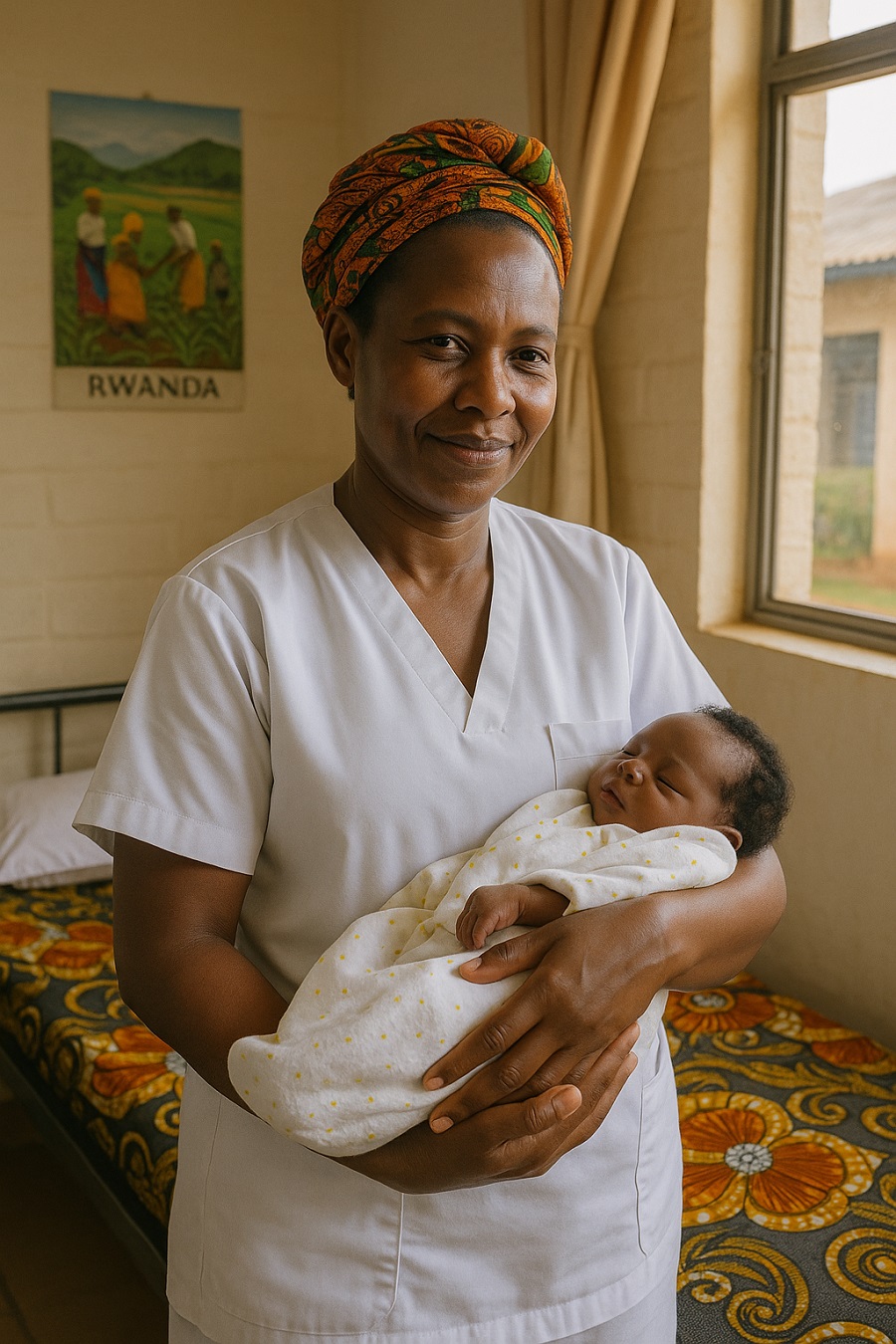
Clarisse’s Clinic: Where Policy Meets Reality
At the health post where Clarisse works, the tools of her trade are humble. A Doppler fetal monitor powered by solar panels. A bicycle for outreach. A shelf of WHO-recommended delivery kits...
Navigating Cultural Norms and Gendered Expectations
Clarisse’s work is not only clinical — it’s deeply cultural. She negotiates traditional beliefs, familial dynamics, and gender expectations...
The Emotional Cost of Compassion
Despite her strength, Clarisse admits to carrying invisible burdens. She has lost mothers. She has delivered babies who never cried...
Recognition, but Not Yet Equality
In 2023, Clarisse was honored by her district as a “Model Health Worker.” She received a plaque, a stipend, and public recognition. Yet her salary remains low, her workload high...
Conclusion: One Life, One Legacy
When asked what she is most proud of, Clarisse doesn’t mention awards or statistics. She tells the story of a young mother named Rosine who survived a difficult birth and later trained to become a community health worker...
References
- Ministry of Health, Rwanda. (2024). Annual Health Sector Performance Report. Kigali.
- National Institute of Statistics of Rwanda. (2021). Rwanda Demographic and Health Survey 2020. Kigali.
- World Health Organization. (2000). Maternal Mortality in 2000. https://doi.org/10.1787/health_glance-2020-en
- World Health Organization. (2021). Delivered by Women, Led by Men. https://doi.org/10.1080/17441692.2021.1882314