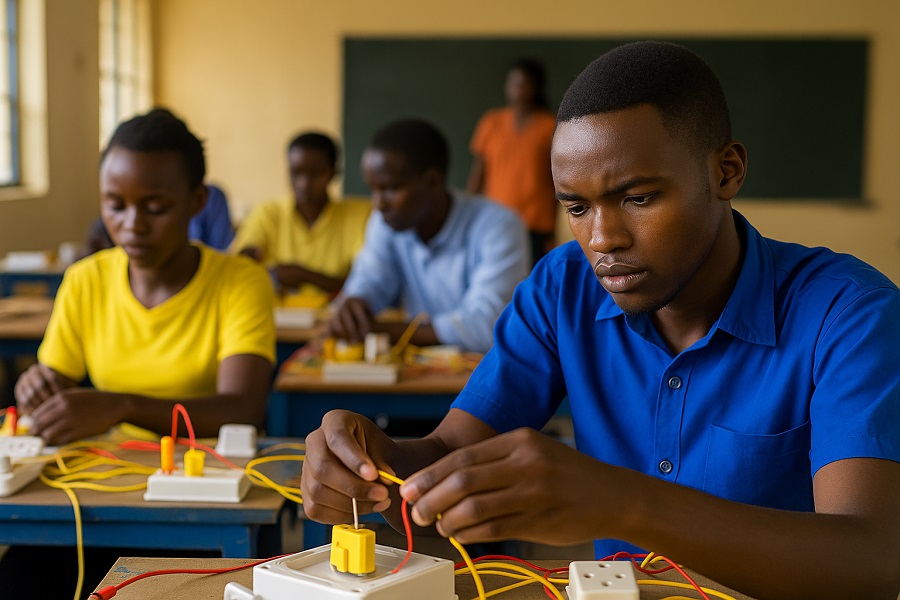
Rwanda stands at the edge of a powerful opportunity: to harness its growing youth population as a catalyst for inclusive, innovation-driven development. But this demographic dividend can only pay off if young people are equipped with the right skills for a rapidly changing job market.
Technical and Vocational Education and Training (TVET) is no longer a fallback option—it is a frontline strategy for transforming economies. Rwanda’s reforms in TVET reflect a new paradigm: one that links classroom learning with industry needs, digital skills with traditional trades, and local context with global standards.
From Blue Collar to New Collar
TVET in Rwanda is shedding its old image. No longer confined to manual labor, the new wave of technical education covers green energy, robotics, hospitality, software development, and creative arts. Graduates are being prepared not only to find jobs, but to create them through innovation and entrepreneurship.
Centers of Excellence and Industry Linkages
The government has established specialized TVET centers of excellence across districts, each focusing on priority sectors—agribusiness, construction, ICT, and more. These institutions partner with private companies for internships, mentorships, and co-designed curricula, ensuring that students are market-ready.
Closing the Gender Gap
Efforts to enroll more girls and women in TVET are paying off. Programs like Girls in Tech and Women in Welding are changing perceptions and opening doors in traditionally male-dominated fields. Scholarships and mentorship initiatives provide added incentives for young women to pursue technical careers.
TVET for Regional Integration
Rwanda’s vision for TVET extends beyond borders. Through harmonization with East African qualification frameworks, graduates can now work seamlessly across EAC member states. Regional skills competitions, certification mobility, and knowledge exchanges are promoting labor integration and youth leadership.
Next Frontiers
Looking ahead, TVET must go digital. E-learning platforms, AR/VR training modules, and mobile-based microcredentials are being piloted to reach more learners and make skills acquisition flexible and lifelong. Rwanda is positioning itself as a hub of 21st-century technical education, setting a benchmark for the continent.